
Navigating the Emotional Landscape of Forest Restoration
I’m a longtime Tahoe resident writing in response to the increasingly emotional debate unfolding here over post-fire forest restoration and the possible use of herbicides following the Caldor Fire.
As with so many issues right now, the conversation has started to fall into simplistic camps, even as the reality on the ground feels far more complicated.
The Caldor Fire changed many of us emotionally, not just environmentally. These forests are not abstract policy discussions for people who live here. They are where we hike, mountain bike, ski, fish, raise families, and reconnect with ourselves.
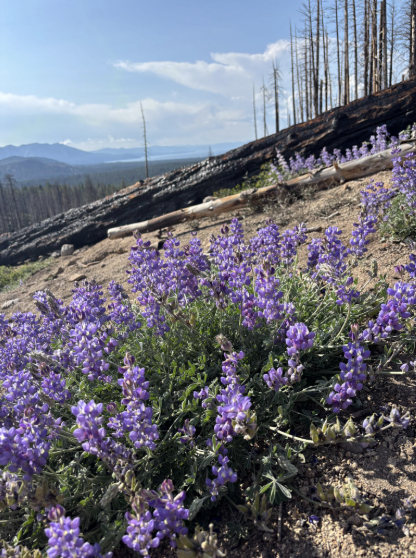
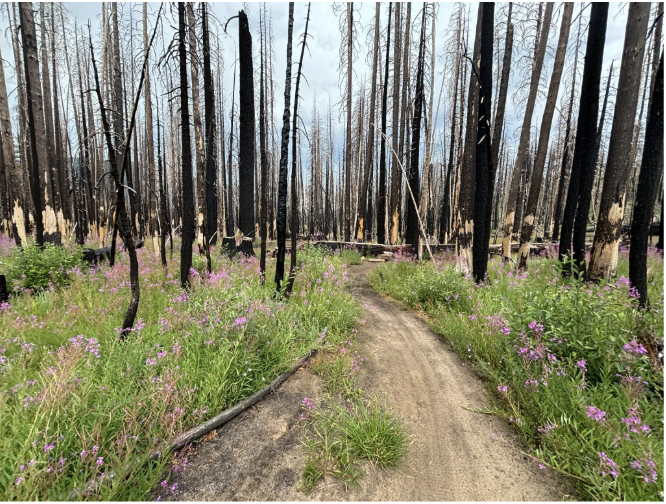
The first time I returned to my favorite trail, Corral, after the fire, I wept. Parts of the landscape felt unrecognizable. Blackened trees and burned soil stretched across hillsides that once felt permanent. But at the same time, there were signs of renewal already emerging...fireweed pushing through ash, green growth appearing among burned embers, small reminders that life and death can exist side by side.
You can still see that contrast throughout the basin. When backcountry skiing on Trimmer Peak, you hike uphill through burned terrain and can clearly trace where the fire stopped along a ridgeline, then ski back down through living forest. The juxtaposition is striking and difficult to fully process.
For many residents, glyphosate represents more than a forestry tool. It carries decades of distrust toward corporations, regulatory agencies, and conflicting scientific messaging. That distrust did not come from nowhere.
At the same time, foresters and restoration scientists are confronting a difficult ecological reality. In some severely burned areas, forests are struggling to regenerate naturally. Dense brush can overwhelm young conifer seedlings, raising fears that some landscapes could permanently shift away from forest ecosystems altogether.
According to current Forest Service documents, herbicides are not proposed as a primary strategy in the Tahoe Basin, but as a limited tool that could potentially be used if manual methods fail to support reforestation. Thousands of seedlings have already been planted without herbicides. Still, restoration crews argue that long-term forest recovery becomes far more difficult when aggressive vegetation overtakes young trees several years after planting.
This leaves many people caught between competing fears: fear of chemical exposure and ecological contamination, and fear of losing entire forest ecosystems.
What troubles me most is how quickly public conversations collapse into accusations and certainty. The people asking hard questions about herbicides are not automatically “anti-science.” The foresters worried about failed reforestation are not automatically reckless or pro-chemical. Most are trying to protect the same thing: a healthy, resilient Tahoe that still feels wild for future generations.
I do not claim to have easy answers. I do believe communities should continue demanding transparency, independent science, environmental oversight, and greater investment in lower-impact restoration methods whenever possible. But I also think we need enough humility to admit that climate change is creating ecological problems for which none of the available solutions feel entirely comfortable.